





Did humans descend from jellyish?
16.12.2013 23:47


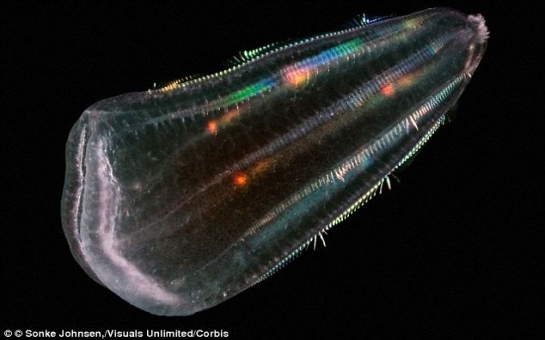
It’s long been thought we evolved from sea sponges, but new genetic research suggests that jellyfish-style creatures may have kicked off the human race.While trying to fill the gaps in the genome sequence of the comb jelly, a gelatinous sea creature similar to a jellyfish, researchers discovered it was related to all other animal species in the world.In fact, it shared so many similarities, the researchers went as far to suggest the creature may have been one of our first ancestors.The research was carried out by scientists from the University of Miami and the National Human Genome Research Institute (NHGRI) in Maryland.They wanted to create the full genome sequence of a comb jelly to fill in some of the gaps in knowledge about the creature.For the study, they analysed a particular type of comb jelly called the sea walnut, or Mnemiopsis leidyi, found in the Atlantic Ocean.When they mapped the genome and ran it through a computer program, the researchers discovered it shared DNA with all other animals. They were also surprised to find that the spread of its DNA through these other species suggested it may have been the starting point.More than half a billion years ago a single line of species separated from all other animals and scientists traditionally believed this originated with sea sponges. According to findings published in the journal Science, however, the comb jelly may be 'the earliest branch of the animal tree and the sister lineage to that of all other animals'.This may also impact on the theory that all animals developed a nervous system and muscles, too. Sponges don't have a nervous system or muscles and when scientists considered them to be our first ancestors, it was assumed other animals evolved and developed these features over time. However, comb jellies do have these features. This means that if they were the first ancestors, some species lost their nervous systems and muscles, despite the fact they would have given that species a so-called 'survival advantage.''Having genomic data from the ctenophores is crucial from a comparative genomics perspective, since it allows us to determine what physical and structural features were present in animals early on,' said author Dr Andy Baxevanis from NHGRI's Division of Intramural Research. 'These data also provide us an invaluable window for determining the order of events that led to the incredible diversity that we see in the animal kingdom.'(dailymail.co.uk)ANN.Az


Facebook
Follow us on Facebook


Similar news
Similar news









Society 15:00
Helsinki Court Jails Fitburg Captain and Azerbaijani Boatswain Over Undersea Cable Damage



 Photo




 Video


