


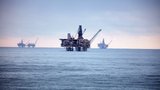


With oil price near $50, resilient U.S. shale producers eye new chapter

20.06.2016 20:01


Two years into the worst oil price rout in a generation, large and mid-sized U.S. independent producers are surviving and eyeing growth again as oil nears $50 a barrel, confounding OPEC and Saudi Arabia with their resiliency.
That shale giants Hess Corp (HES.N), Apache Corp (APA.N) and more than 25 other companies have beaten back OPEC's attempt to sideline them would have been unthinkable just months ago, when oil plumbed $26 a barrel and collapses were feared.
To regain market share, the Organization of the Petroleum Exporting Countries in late 2014 pumped more oil despite growing global oversupply. It aimed to drive prices lower and force higher-cost producers out of the market, with shale oil seen as especially vulnerable.
The pain was acute. Industry revenue fell more than 30 percent in 2015 from the previous year, the U.S. drilling rig count dropped by more than 70 percent from when oil was still above $100 per barrel, stock valuations plunged and scores of small producers filed for bankruptcy.
But so far no U.S. producer that pumps more than 100,000 barrels per day (bpd) has gone bankrupt. The survival of these big producers partly explains why overall U.S. production has slipped only about 10 percent since peaking at 9.69 million bpd.
Their agility - which required slashing costs in half while doubling down on improved techniques to squeeze more oil from each new well - is now allowing the industry to cautiously focus on growth again.
But this time, U.S. producers say they will stay focused on capital returns, having abandoned a culture of maximizing production regardless of costs.
OPEC and Saudi Arabia "thought that there would be major capitulation and damage to U.S. shale producers as a result of the deep downturn," said Les Csorba, a leadership consultant at Heidrick & Struggles who works with shale executives. "But what happened was that it actually created a new paradigm among U.S. producers to transform their businesses."
Acquisition activity has picked up markedly in recent weeks, with Devon Energy Corp (DVN.N) finding buyers for more than $2 billion in non-core assets. The company is using part of that cash to boost its capital budget by $200 million.
WPX Energy Inc (WPX.N), which spent more on acquisitions last year than any U.S. oil company, sold 45 million new shares earlier this month, planning to use the funds to drill new Texas wells.
"We're a leaner organization than we were before the price crash," said Rick Muncrief, WPX's chief executive.
True, costs were slashed in the height of the price downturn when oil plumbed $26 per barrel in February and "there's a perception out there that if commodity prices go back up, you're going to lose those cost savings," Muncrief said.
But, he stressed, "that's simply not the case."
Industry consensus holds that costs for oilfield services - fracking and the like - may rise in tandem with oil prices, though high-tech advancements in sand, drilling and chemical technologies should stick around.
"Real progress for us has come on the cost side," said John Christmann, Apache's chief executive. "We plan to maintain a methodical approach to the cycle with a focus on returns."
U.S. oil prices CLc1 have recouped nearly half their losses from mid-2014 highs, almost doubling from the 13-year lows hit in February to reach over $51 in early June.
A year ago prices hit similar levels before plunging; oil executives are hoping past is not prologue.
"People are not necessarily freaking out anymore," said Sam Xu, an investment banker with CohnReznick Capital Market Securities LLC. "Instead of trying to keep their heads above the water, they're now trying to get back in the game."
To be sure, some executives say a bit more is needed - at least $60 a barrel - to ramp up drilling and fracking operations across most U.S. shale plays.
That attitude has been reflected in oil producers' capital budgets, which are still billions below 2015 levels.
Hess has long said it will add rigs in North Dakota when oil prices hit that mark, even though it is profitable in the state at $40.
"We need to see a period of stability in prices," Greg Hill, chief operating officer at Hess, said. "We need to make sure it's not quicksand."
Some oil companies aren't ready to even acknowledge the $50 milestone as relevant.
"We are head down and working and not ready to take any kind of victory lap," said Kristin Thomas, spokeswoman for Continental Resources Inc (CLR.N), North Dakota's second-largest oil producer.
Others are moving ahead in the Bakken, Eagle Ford and Permian, considered the cheapest and most-prolific U.S. shale oil fields.
"The Permian is set up for fairly explosive growth over the next several years," Scott Sheffield, CEO of Pioneer Natural Resources Co (PXD.N), said at a S&P Global Platts conference. Pioneer this week said it would increase its rig fleet by 40 percent.
Still, most producers are moving slowly.
"People are going to be waiting to see if this $50 price sticks around," said Muncrief, the WPX CEO.
(reuters.com)
www.ann.az


Facebook
Follow us on Facebook


Similar news
Similar news



Business 15:00
Azerbaijan Holds Talks on Digitizing Pension and Benefit Payments for Citizens Living Abroad






 Photo




 Video


