



How is this not World War III?
29.05.2020 12:20


Turkish forces shot down a Russian plane near the Turkish-Syrian border on Tuesday, dangerously escalating a conflict that is expanding ever more rapidly and unpredictably.
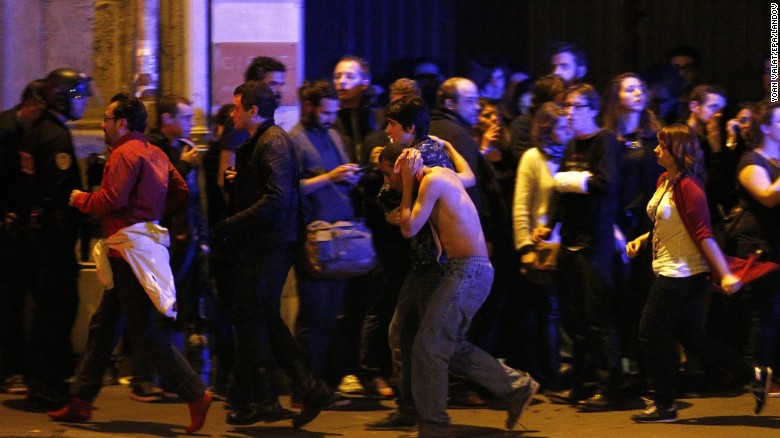
Take a step back and look at what Syria's war has wrought: Only days after the Paris attacks -- one of the worst terrorist attacks on European soil since World War II -- and with the unofficial capital of the European Union, Brussels, still under a partial lockdown, a member of NATO downed a Russia fighter jet.
If this had occurred during the Cold War, we would be bracing for the possibility of a nuclear war. Thankfully, that conflict is over. Instead of dialing nuclear codes, Russian President Vladimir Putin called for an emergency session of the United Nations Security Council while NATO summoned its own emergency meeting.
Don't misinterpret the moves as evidence of calm; a furious Russia has called Turkey "accomplices of terror" and Putin warned of "significant consequences." And these are just some of the latest developments in the world's most complicated conflict.
Just after the Paris massacres, Pope Francis said the terrorist attacks were part of a piecemeal World War III. But it is the war in Syria itself that is morphing into this century's world war.
The Syrian conflict, which turned deadly in 2011 when President Bashar al-Assad responded to calls for democracy by massacring protesters, has become a global vortex of violence, a black hole that swallows other conflicts. Day after day the number of disputes and rivalries fueling the fighting on that part of the Levant grows, bringing new firepower and more recruits.
It started with pro-democracy activists against Assad's forces; it drew a competing collection of armed opposition groups. It pitted moderates against extremists, and then extremists against ultra-extremists.
It rages with the sectarian fury of Shiites against Sunnis, Arabs against Iranians. Lebanon's Hezbollah, backed by Iran, fights against militias backed by Gulf Arabs. Al Qaeda's al Nusra Front competes with ISIS, the Kurds fight against ISIS and against the Syrian military and Turkey fights against the Kurds, while feebly taking on ISIS and viscerally pushing for Assad's ouster.
And there's much more, with greater geopolitical consequences. There's Russia, the U.S. and the "anti-ISIS coalition," and soon a France-assembled bloc to fight ISIS.
There is both more and less than meets the eye. While Russia and Turkey have boasted of fighting ISIS, the "civilized" world's anointed enemy, the fact is that each has other objectives in mind, which is why Tuesday's shootdown won't be dismissed as an accident in a crowded theater of war.
Russia is in Syria not to fight ISIS but to save the Assad regime as a permanent Russian ally. Turkey has two goals: It wants to clip the wings of the independence-minded Kurds, but it also wants to see Assad fall.
And while Turkey's goals differ from those of its NATO allies -- particularly because Ankara has largely turned a blind eye to ISIS, an enemy of the Kurds -- the NATO bloc mostly agrees on its antipathy towards Assad.
Then there is an even larger geopolitical contest at play. Russia is working to erode America's standing in the Middle East, advancing Putin's agenda of challenging and defying Washington.
While U.S. President Barack Obama was trying to reassure America that its very measured efforts to contain and degrade ISIS were paying off, Putin sent a massive military force to Syria and recast the conflict. Assad may have been about to fall, but Putin, now working on the same side as Iran and Hezbollah, made sure that won't be happening any time soon. And now that ISIS has launched attacks in Western Europe, Assad's hold on power looks more likely to survive.
Confused? This is only scratching the surface. Everyone in this fight has enemies and friends on opposing sides.
This is what a world war looks like: strange bedfellows, conflicting agendas, alliances of convenience. And if you think the core of the fighting, the issues and ideologies at stake, seem muddled, try to find out what World War I was all about. Clarity is not a requirement for a world war.
The Syrian World War already involves scores of countries. Last year, the U.S. assembled a wide-ranging coalition of more than 60 nations. From South Korea to Australia, governments have participated in varying degrees in the campaign to defeat ISIS.
(СNN)
www.ann.az


Youtube
Follow us on Youtube


Similar news
Similar news




 Photo




 Video


