




Antarctic sea ice records lowest levels ever
06.03.2023 12:30


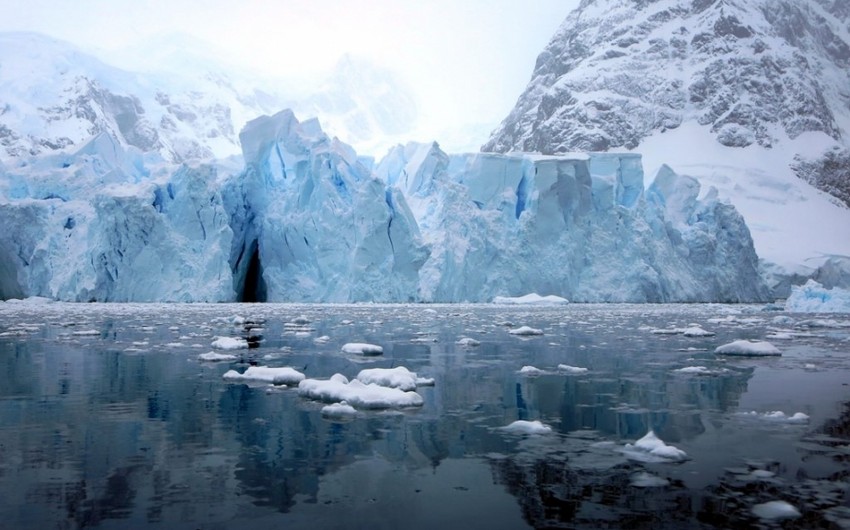
Antarctic sea ice likely shrunk to a record low last week, US researchers said on February 27, 2023, its lowest extent in the 45 years of satellite record-keeping, reported from foreign media.
The Antarctic sea has recorded the lowest sea level for the third time in six years, leaving scientists scrambling for answers. The satellites have helped scientists keep a track of the ice cover around Antarctica’s 18,000km coastline.
The scientists have noted that across four decades of satellite observations, there has never been less ice around the continent than there was last week, the Guardian reported.
"We are seeing less ice everywhere. It’s a circumpolar event." scientists said.
The report noted that in the summer of 2022, the amount of sea ice dropped to 1.92m sq km on February 25 – an all-time low based on satellite observations that started in 1979.
It further said that by February 12, 2023, the 2022 record had already been broken.
"The ice kept melting, reaching a new record low of 1.79m sq km on 25 February and beating the previous record by 136,000 sq km – an area double the size of Tasmania." read the Guardian report.
"We don’t want to lose sea ice where there are these vulnerable ice shelves and, behind them, the ice sheets," Prof Matt England, an oceanographer and climate scientist at the University of New South Wales told Guardian.
The fate of Antarctica – especially the ice on land – is important because the continent holds enough ice to raise sea levels by many metres if it was to melt.
The report explains that melting sea ice does not directly raise sea levels because it is already floating on water. However, there isa domino effect that causes damage.
Sea ice helps to buffer the effect of storms on ice attached to the coast. If this disappears the increased wave action can weaken those floating ice shelves that themselves stabilise the massive ice sheets and glaciers behind them on the land.
The melting of the Thwaites glacier – known as the "doomsday glacier"--will be a cause for concern as that glacier holds enough water to raise sea levels by half a metre.
www.anews.az


Youtube
Follow us on Youtube


Similar news
Similar news












 Photo




 Video


