





The complicated culture of Bosnian coffee - PHOTO
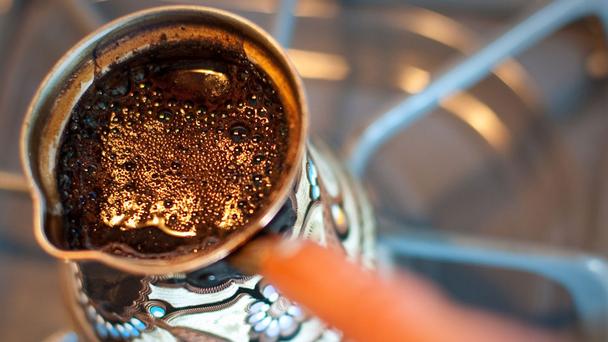


Wanting a taste of home, my friend and native Turk Elif Burgaz ordered a Turkish coffee at Nanina Kuhinja, a restaurant in Baščaršija, Sarajevo’s Turkish quarter. The man sitting next to us, Nadir Spahić, was quick to interject. “Bosnian coffee is not Turkish coffee,” he said, a hint of defensiveness in his voice. The difference, he explained, is in the process.Both start out with roasted coffee beans that are pulverised into a fine powder and cooked in a small (generally) copper-plated pot with a long neck, called a džezva (or cezve in Turkish). But the Turks add the coffee and optional sugar to cold water before placing it on the stove. When preparing Bosnian coffee, the cold water goes on the stove alone.After coming to a boil, a small amount of water is set aside. The coffee is then added to the džezva and put back onto the stove for a few seconds, allowing the liquid to boil yet again, rise to the point of overflowing and create a thick foam. This process may be repeated several times. Then the hot water that had been set aside is added.To all but the biggest connoisseurs, these differences seem minute. But adding the hot water at the end creates even thicker foam, and adding the coffee later in the process often creates a more robust flavour in the already intense coffee. At least that's what I was told when I received my Bosnian coffee making certificate from Rahatlook, a lovely café in Baščaršija that offers a quick, somewhat gimmicky lesson in the procedure.To me, Bosnian coffee tasted indistinguishable from its Turkish counterpart, which is to say it was potent, bitter and as thick as mud. For tourists like myself, an easier way to tell the difference between the two coffees may be by how each one is served. “In Turkey, the cezve belongs to the kitchen, not to the table,” Burgaz said. Turkish coffee is served in a single small cup; Bosnian coffee is served in a full džezva (which holds three cups of coffee) on a round iron tray with an empty, ceramic cup, a glass of water, a dish full of sugar cubes and a rahat lokum, a Bosnian candy that foreigners might call Turkish delight.When you’re ready for your coffee, first take a sip of water. Spoon out a layer of foam from the top, then pour from the džezva before adding the foam to the cup (after all, Bosnian coffee with no foam is no Bosnian coffee at all). If you want sugar, don’t plop it in your drink; instead, take a bite from one of the cubes on your tray and put it under your tongue to dissolve as you sip.There are two real advantages to coffee served in a džezva. First, the sludge that often forms in the bottom of unfiltered coffee – and is so characteristic of Turkish coffee – remains in the pot instead of your cup, decreasing the chance that an amateur drinker will end up with a mouthful of grit.Secondly, the copper-plated džezvas keep coffee hot for long periods of time; important because while a cup of Bosnian coffee might be smaller than you’re used to, it’s also probably stronger. Plus, Bosnians sit for hours in front of a cup, just making conversation. We decided to do the same.As Burgaz and I sat, refilling our cups and catching up, I returned to thinking about the defensiveness in Spahić’s voice when he pointed out the differences between Bosnian coffee and Turkish coffee.(BBC)Bakudaily.az











Latest news 
More news 
 Photo




 Video


