





Ancient parasite highlights humans' role in spread of disease
20.06.2014 20:59


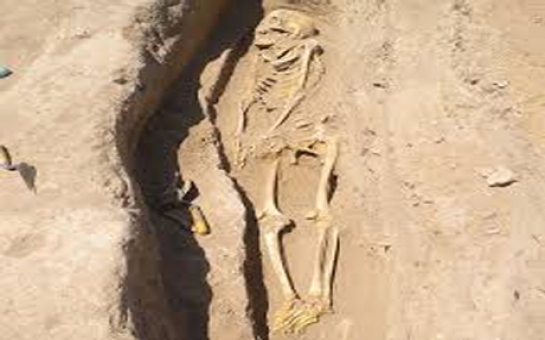
The discovery of a schistosomiasis parasite egg in a 6,200-year-old grave in Syria may be the earliest evidence that agricultural irrigation systems in the Middle East contributed to a vast spread of disease, scientists said on Friday.Schistosomiasis - also known as bilharzia, snail fever, or Katayama fever - is caused by flatworm parasites that live in the blood vessels of the bladder and intestines. The infection can lead to anaemia, kidney failure and bladder cancer.In a study in the Lancet Infectious Diseases journal, researchers said it may have been spread by the introduction of crop irrigation in ancient Mesopotamia, the region along the Tigris-Euphrates river system that covers parts of what is Iraq, Iran, Kuwait, Syria and Turkey.The infection, in which the parasite burrows through the skin of people wading or swimming in waters where it hides in freshwater snails, has become progressively more common over time and now causes a huge burden of disease across the world.According to the World Health Organization, schistosomiasis affects almost 240 million people worldwide, and more than 700 million people live in endemic areas.The egg was found in the pelvic area of the burial grave, where the intestines and bladder of the person would have been.The discovery, at Tell Zeidan in northern Syria, was made by a team of archaeologists and biological anthropologists working at Cambridge, The Cyprus Institute in Cyprus and the University of Chicago's Oriental Institute in the United States.The researchers took soil samples from the head and foot areas of the grave to act as control samples and found they contained no parasitic eggs. This suggests the grave site was not contaminated with the parasite more recently, they said.Piers Mitchell of Britain's University of Cambridge, who led the research team, said the egg may be among the oldest evidence of man-made technology inadvertently causing disease outbreak."The individual who contracted the parasite might have done so through the use of irrigation systems that were starting to be introduced in Mesopotamia around 7,500 years ago," he said in a statement about his findings.The oldest schistosomiasis egg found previously was in 5,200-year-old Egyptian mummies.The parasite spends part of its life cycle in snails that live in warm fresh water, before leaving the snail to burrow through the skin of people in the water.(Reuters)ANN.Az


Twitter
Follow us on Twitter

Similar news
Similar news










Latest news 
More news 
 Photo




 Video


