





Is this the end of Iraq?


Iraq's plagued by violence, so what's new?
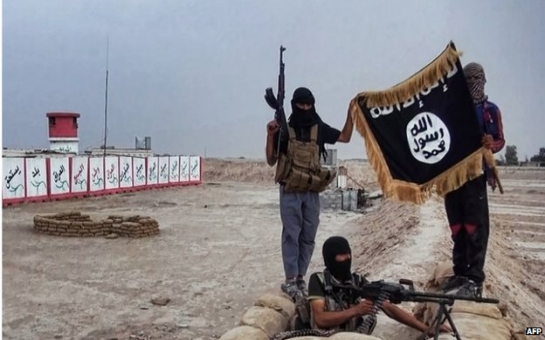
The US-led invasion in 2003 unleashed a bloody insurgency led by Iraq's Sunni Arabs, who controlled the country under Saddam Hussein. Attacks on officials and civilians triggered large-scale reprisals by members of the Shia Arab majority.Although still below the peak of 2006, sectarian violence has been on the rise since US troops withdrew in late 2011.Current events kicked off in December when Sunni militants seeking to create an Islamic state in Iraq and Syria seized the central city of Falluja.Backed by local tribesmen, the militants exploited widespread anger among Sunni Arabs, who accuse Prime Minister Nouri Maliki, a Shia, of discriminating against them and monopolising power.Six months later, the militants launched an assault on Iraq's second largest city, Mosul, to the north. Thirty-thousand soldiers dropped their weapons and fled when confronted by an estimated 800 gunmen. Emboldened, the militants advanced southwards, towards the capital.Who's behind the offensives?The assaults on Iraq's towns and cities have been led by the Islamic State in Iraq and the Levant (known as ISIS). Five years ago the US said the al-Qaeda breakaway was "on the verge of a strategic defeat".Today, it carries out almost daily bombings in Baghdad and controls territories stretching for hundreds of miles through western and northern Iraq and into Syria, where it aspires to form a state.However the brutal tactics of ISIS's fighters and the extreme interpretation of Islamic law they have imposed on areas under their control have so alienated rebel groups in Syria that they have joined forces to expel them.ISIS has even proved too much for al-Qaeda's central leadership, which disavowed the group in February. Despite the backlash, ISIS grows ever stronger.Although ISIS numbers only an estimated few thousand fighters, they are hugely bolstered in Iraq by support from Sunni tribesmen and former soldiers from the Iraqi army, which was controversially dissolved by the US after the overthrow of Saddam.The Iraqi government is believed to command about 930,000 US-trained and US-armed security personnel, including 270,000 soldiers, so on paper they ought to be able to easily overcome a militant group whose supporters say has at least 15,000 fighters.However, the same might have been said after Falluja fell. Troops have since become increasingly disillusioned by the grinding conflict and ISIS's ferocious attacks - from suicide bombings to beheadings and crucifixions - leading many to desert. The security forces are also said to have been steadily weakened by sectarian tensions, abuses and corruption.Is this linked to what's going on in Syria?The turmoil in Syria has undoubtedly destabilised Iraq. After initially staying on the sidelines, Iraqis are now fighting on both sides of the three-year-old conflict inside its western neighbour.Mr Maliki's Shia-dominated government denies supporting Syrian President Bashar al-Assad - a member of the heterodox Shia Alawite sect - but analysts say it has turned a blind eye to the flow of weapons and fighters to Syria from Iran, Mr Assad's staunchest ally, and Iraq's Shia heartland.Syria's predominantly Sunni rebels have received support from Sunni Arabs in Iraq, who have provided weapons, ammunition, shelter and manpower. ISIS sent money and experienced militants to Syria, before joining the rebellion itself in 2013. It has since established strongholds on both sides of the porous border, moving recruits and resources between them, and adding another dimension to the crisis.Is it all about religion?For more than 1,000 years, Iraq has served as a battleground for many of the events that have defined the schism between Sunni and Shia Muslims.In recent decades, the dominance of Iraq's minority Sunni Arabs and their persecution of the Shia majority only served to stoke sectarian tensions.The overthrow of Saddam Hussein gave the Shia an opportunity to seek redress.Though religious divisions have been the main catalyst of the violence, many argue that blaming sectarianism alone overstates the case.Ethnic conflict has contributed to the instability and political disputes have also played an important role.The US has said ISIS is "a threat to the entire region" and President Barak Obama is looking at all options - including military ones - to help the Iraqi government. However, officials have insisted he is not contemplating sending US troops back to Iraq.Iranian President Hassan Rouhani has denounced ISIS as "barbaric" and warned that his country will not tolerate "this violence and terror". Iranian and Iraqi security sources have been cited as saying that Revolutionary Guards units have been sent to Iraq to assist.Turkey has warned that it will retaliate if any of its 80 citizens recently seized by ISIS in northern Iraq are harmed.Where does ISIS get its money from?ISIS is reported to have vast funds at its disposal.Initially, much of its financial support came from individuals in Arab Gulf states. Today, ISIS is said to earn a significant amounts from the oil fields it controls in eastern Syria, and from smuggling and extortion.US officials estimated it had cash and assets worth $875m (£515m) before the fall of Mosul, when it stole $425m from a branch of the Bank of Iraq. Experts say that makes ISIS the world's wealthiest militant group.(BBC)Bakudaily.az






Latest news 
More news 
 Photo




 Video


