




The Taliban's psychiatrist
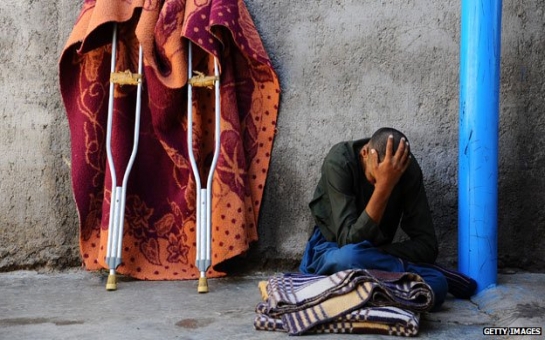


"I remember the first group of Taliban who came to see me," says Afghan psychiatrist Nader Alemi. "They used to come in groups, not as individuals. When I treated one, he would spread the word."Fighters would turn up with my name on a piece of paper. They would say that I'd cured their friend, and now they wanted to be cured too. Most of them had never been to a doctor before."A familiar figure in Afghanistan, Alemi is based in Mazar-e-Sharif in the north of the country. Taliban forces captured the city in August 1998 and won control of much of the surrounding area.But while they were succeeding on the battlefield, Alemi saw the mental strain of years of fighting.He was the only psychiatrist in northern Afghanistan to speak Pashto, the language of most Taliban."Language was very important - because I spoke their language, they felt comfortable opening up," he says.One day the Taliban's provincial governor Akthar Osmani summoned Alemi to see him - Mullah Akhtar was second in command to Mullah Omar, the group's spiritual leader."He was hearing voices and he was delusional - his bodyguards told me they could hear him raving during the night," says Alemi. Mullah Akhtar's staff also said their boss often didn't recognise them."This man had been on the front line for goodness knows how long, and seen goodness knows how many people killed in front of him. All those explosions and screams may still have been echoing in his head, even sitting in the comfort of his office."Alemi wanted to see Mullah Akhtar regularly to provide long-term treatment, but his patient would go off on missions every three months, and only kept a few appointments. Much later, in 2006, Mullah Akhtar was killed in an airstrike.Alemi treated other high-ranking Taliban officials too. "We became sort of friends. [One] asked me to see him at his headquarters - he was suffering from depression and chronic pain, and I prescribed him drugs to alleviate his symptoms.""I don't remember the exact numbers who came to me, but it must have been in the thousands. I treated them for almost three years, before Mazar was recaptured in November 2001.Because most of these patients had never been to a doctor before, Alemi asked if their commanders forbade it but that wasn't the case. "To be honest, they were so into their mission and daily routine that they didn't have time for medication. Surprisingly, all of them believed in my treatments."The reason they gave me for the turmoil in their minds was the uncertainty in their lives. They had no control over what was happening to them. Everything was in the hands of their commanders. They got depressed because they never knew what would happen from one minute to the next."Most of them hadn't seen their families for months - they hadn't seen their children who had grown big."Alemi found many of the soldiers wanted to die. "They told me they [wanted] to commit suicide, but couldn't because of Islamic values."One said: "Every time I go to the frontline, I wish someone would shoot me and bring an end to my life. But I still survive and hate this sort of living.""I used to treat the Taliban as human beings, same as I would treat my other patients… even though I knew they had caused all the problems in our society," says Alemi. "Sometimes, they would weep and I would comfort them."Bakudaily.Az









Latest news 
More news 
 Photo




 Video


