





Russia's Noah's Ark
29.05.2020 10:00


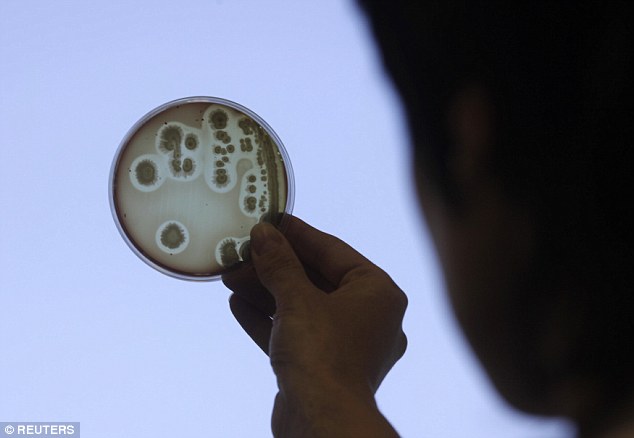
A Russian university is planning to create a 'Noah's Ark' consisting of the frozen DNA of every creature that has ever lived.
Moscow State University has received the country's largest-ever scientific grant to embark on the project, which is scheduled to be completed by 2018 and will be based in a 430sq km site on campus.
The institute, which has received 1billion rubles (£12.6million) to help get it off the ground, aims to cryogenically freeze and store cells which are capable of reproducing.
Viktor Sadivnichy, the university's rector, likened the gigantic project to a modern-day 'Noah's Ark', RT reported.
He explained: 'It will involve the creation of a depository - a databank for the storing of every living thing on Earth, including not only living, but disappearing and distinct organisms.
'It will also contain information systems. If it's realised, this will be a leap in Russian history as the first nation to create an actual Noah's Ark of sorts.'
The announcement marks the latest, and most ambitious, of the world's DNA banks which have increased in numbers in the past decade following breakthroughs in technology and growing concern about species extinction.
These are known as frozen zoos - the most well known of which is that at San Diego Zoo.
Staff at the research centre have sperm, DNA and other animal matter frozen in liquid nitrogen since 1976. It currently holds about 8,400 samples from over 800 species.
Britain also maintains the Frozen Ark Project, which is run by a consortium of biological societies, zoos, museums and research facilities.
Its website states preserved viable cells will enable biologists to 'reverse the dangerous loss of genetic variation that can cause infertility and early death in breeding programmes'.
It holds a remarkable 28,604 frozen DNA samples, of which more than 7,000 are from species on the 'red list' of endangered animals.
This includes the Spiny Lobster, the Channel Islands Fox, the Bonefish, the Indiana Bat and Cat's Paw Coral.
But Russia's historic Noah's Ark project is not the first of its kind for the country - a storage facility in the remote Siberian wilderness aims to use the natural cold of Siberia's thick permafrost to preserve seed and plant samples for up to 100 years.
At least 1.5million seeds from plants and vegetables will be housed in the cryostorage unit in Yakutsk, protecting many of the world's important foods and endangered plant life against climate change, war, and disaster.
(dailymail.co.uk)
ANN.Az


Instagram
Follow us on Instagram
Similar news
Similar news










 Photo




 Video


