





Why Islam prohibits images of Muhammad
21.01.2015 12:30


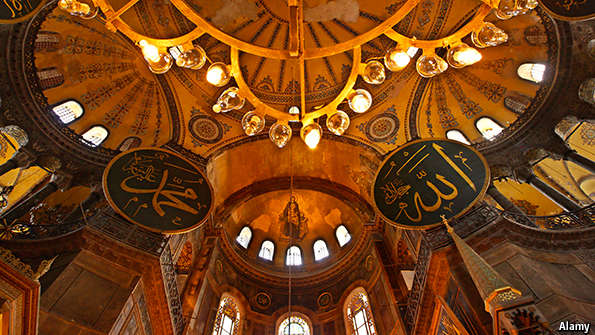
LOOK upwards in the magnificent place of worship in Istanbul now known as the Hagia Sophia Museum (pictured), and you will see two different ways of approaching the divine, reflecting different phases in the building's history. There are Christian mosaics, among the finest ever made, of Jesus Christ, his mother and other holy figures; and there is swirling Islamic calligraphy, which reflects the idea that God speaks to man through language, whether spoken or written, rather than through pictures or anything physical. For most of its history, Islam has had a deep aversion to the lifelike portrayal of animate beings, especially human beings, and above all to the representation of Muhammad, the messenger of God—or indeed any of the preceding prophets, such as Nuh (Noah) or Isa (Jesus). For an artist, only trying to depict the Deity could be more impious than drawing Muhammad. Why?
Such beliefs are rooted in Islam's horror of idolatry, and generally of anything that could come between man and God, or compromise the uniqueness and indivisibility of God. The Koran does not specifically condemn representative art, but it has a lot to say about paganism and idolatry; and Islam is correspondingly wary of anything that could become an idol or detract from the worship of God alone. The text most often cited in defence of the ban on representation is a hadith, one of the vast lore of sayings about the deeds and words of Muhammad. He is reported to have spoken harshly to a man who made his living through art. "Whoever makes a picture will be punished by Allah till he puts life in it, and he will never be able to do that." This is taken to mean that for a human, to try "making" a new being is usurping God's role—and is in any case doomed to fail.
The belief is most strongly held by the Sunnis who form the great majority of the world's Muslims, especially the more puritanical and zealous groups such as the Wahhabis who dominate Saudi Arabia. Shia Islam is much more open to the depiction of human beings, up to and including Muhammad himself. This difference fuels the zeal of violent Sunni groups like Islamic State who have destroyed Shia shrines and images, claiming in doing so to be purifying their religion of idolatrous accretions. By contrast the leading figure among the Shias of Iraq, Ayatollah Sistani, has said the depiction even of Muhammad is acceptable, as long as it is done with proper reverence.
To illustrate that the ban on depiction has not been absolute, it is often pointed out the portrayal of human figures, including Muhammad, was a central feature of Persian miniatures, under both Sunni and Shia rulers. In more modern times, the theological ban on human depiction has been challenged in many Muslim countries by the ubiquity of human images in films, on television and in political propaganda posters. In Arab countries, ingenious compromises between depiction and non-depiction are sometimes found; on road signs, for example, a headless human figure will show pedestrians where to walk. At a slightly higher theological level, it is sometimes asserted (in the course of Christian-Muslim debates, for example) that Muhammad's aversion to images had exceptions. According to one version of his life, he went into the Ka'aba—the original place of worship in Mecca—and found it full of idols, which he destroyed; but there were two images which he allowed to remain, albeit hidden from public view: those of Jesus and Mary.
(economist.com)
ANN.Az


Facebook
Follow us on Facebook


Similar news
Similar news









Latest news 
More news 
 Photo




 Video


